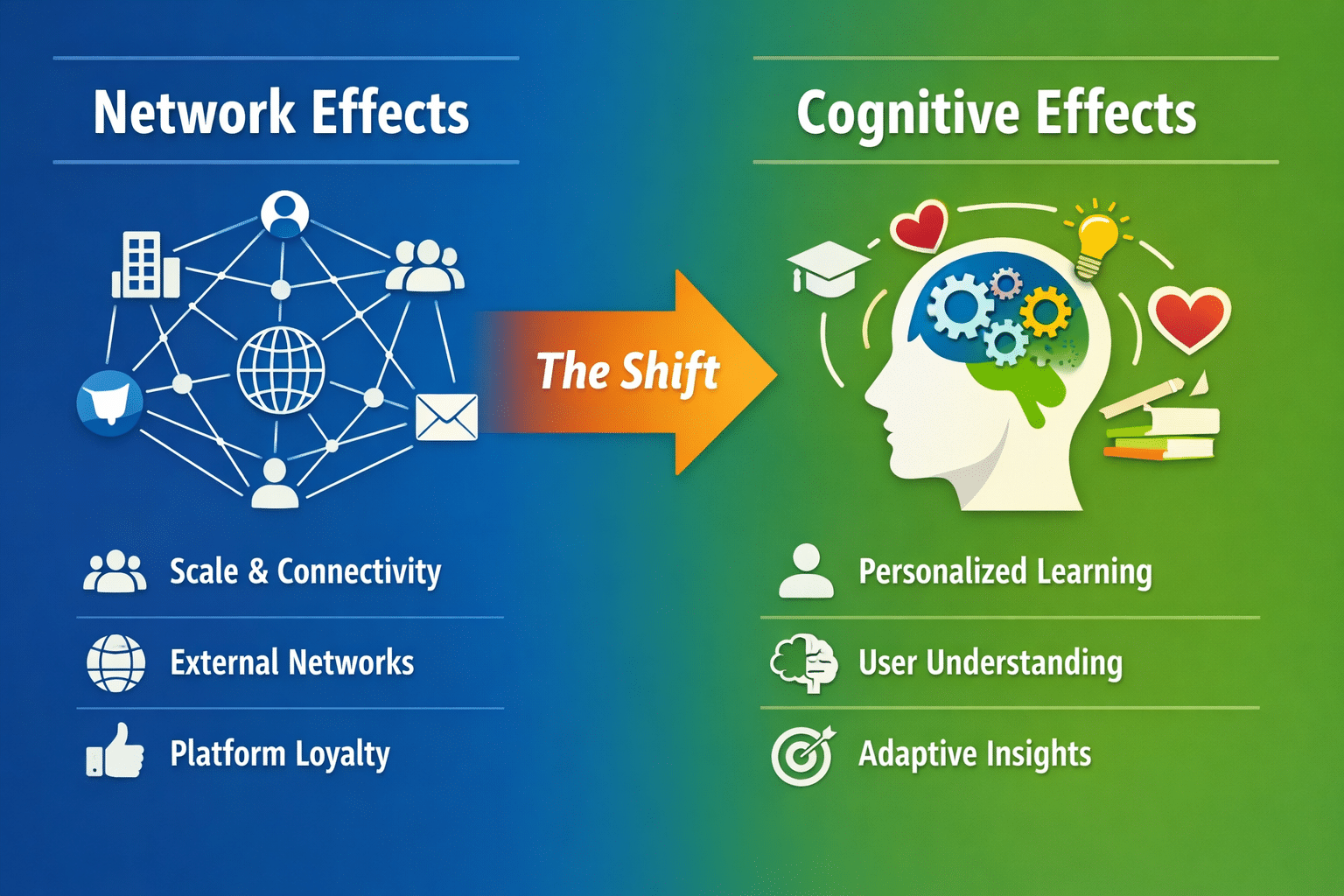
For years, the education sector has been cautiously eyeing the horizon of digital transformation. While many administrative tools made the leap early, the Student Information System (SIS) remained anchored in traditional on-premises environments. However, recent market data confirms that we have reached a definitive tipping point.
The shift to the cloud is no longer a future trend; it is the current reality.
Over the last year, I’ve shared several posts and given a few presentations on the ongoing move to the cloud in education. None of this should come as a surprise.
A Comprehensive Shift in Implementation
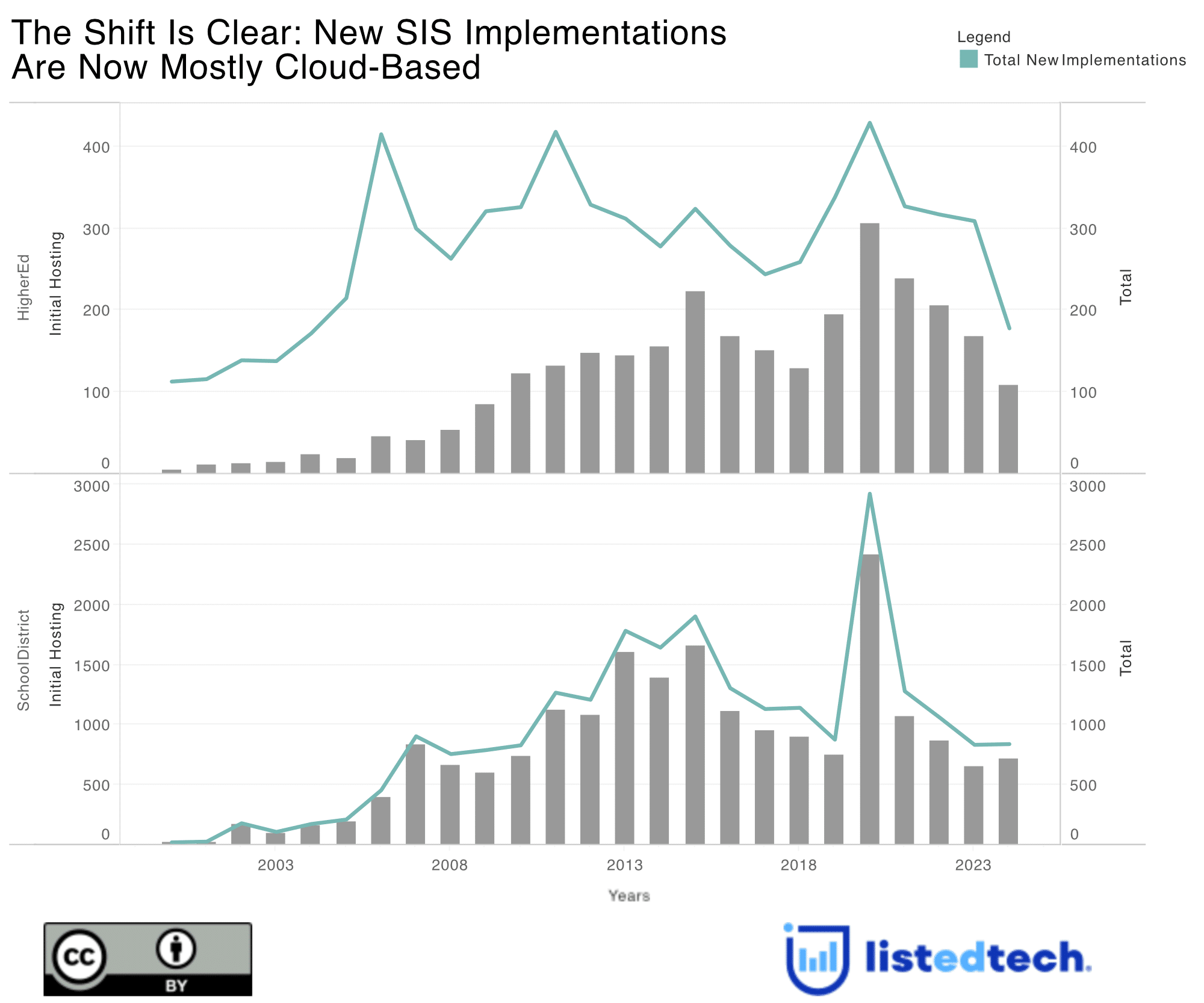
When we examine the trajectory of SIS adoptions over the last two decades, a clear pattern emerges. In both Higher Education and School Districts, the volume of new implementations has seen significant cycles, but the underlying delivery method has fundamentally changed. In the early 2000s, cloud-based systems were nearly non-existent. Today, choosing an on-premises system has shifted from being the safe, standard choice to becoming a rare exception in the market.
What is worth showing, though, is how complete this shift has become and what’s driving it now.
The New Driver: Legacy Migration
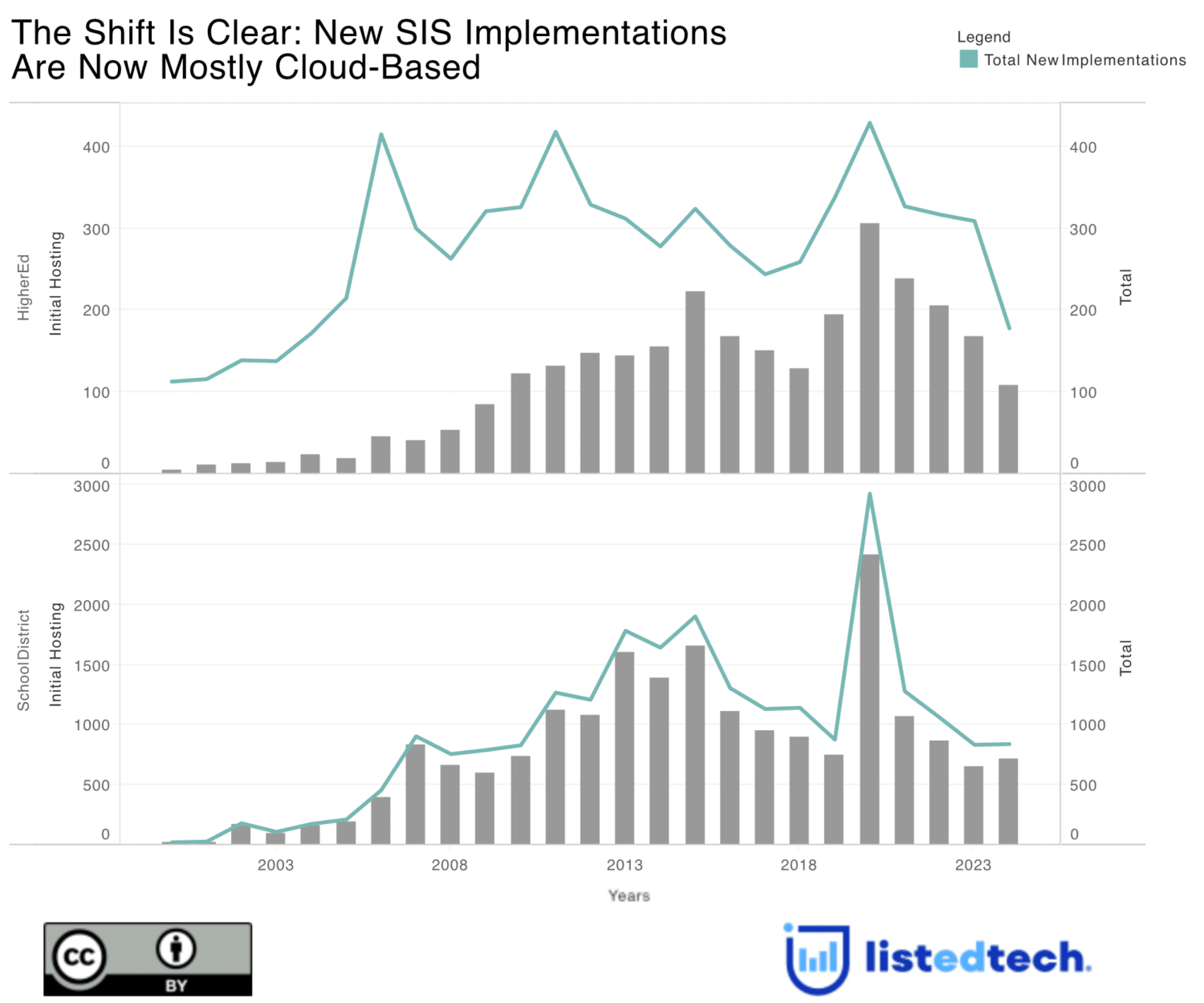
The second chart tells the more interesting story. It’s not just new implementations driving cloud adoption anymore; we are entering a phase where cloud adoption is becoming a life-cycle decision, not just a procurement one.
When we look at new SIS implementations, the picture is very clear:
- K–12: the market has moved decisively, with new implementations now being over 85% cloud-based.
- HigherEd: roughly 60% cloud-based
But the real kicker is that institutions aren’t just buying new cloud systems—they’re modernizing what they already have. In HigherEd, nearly 30% of cloud moves are no longer new systems; they are existing customers migrating their original on-prem implementations into cloud environments.
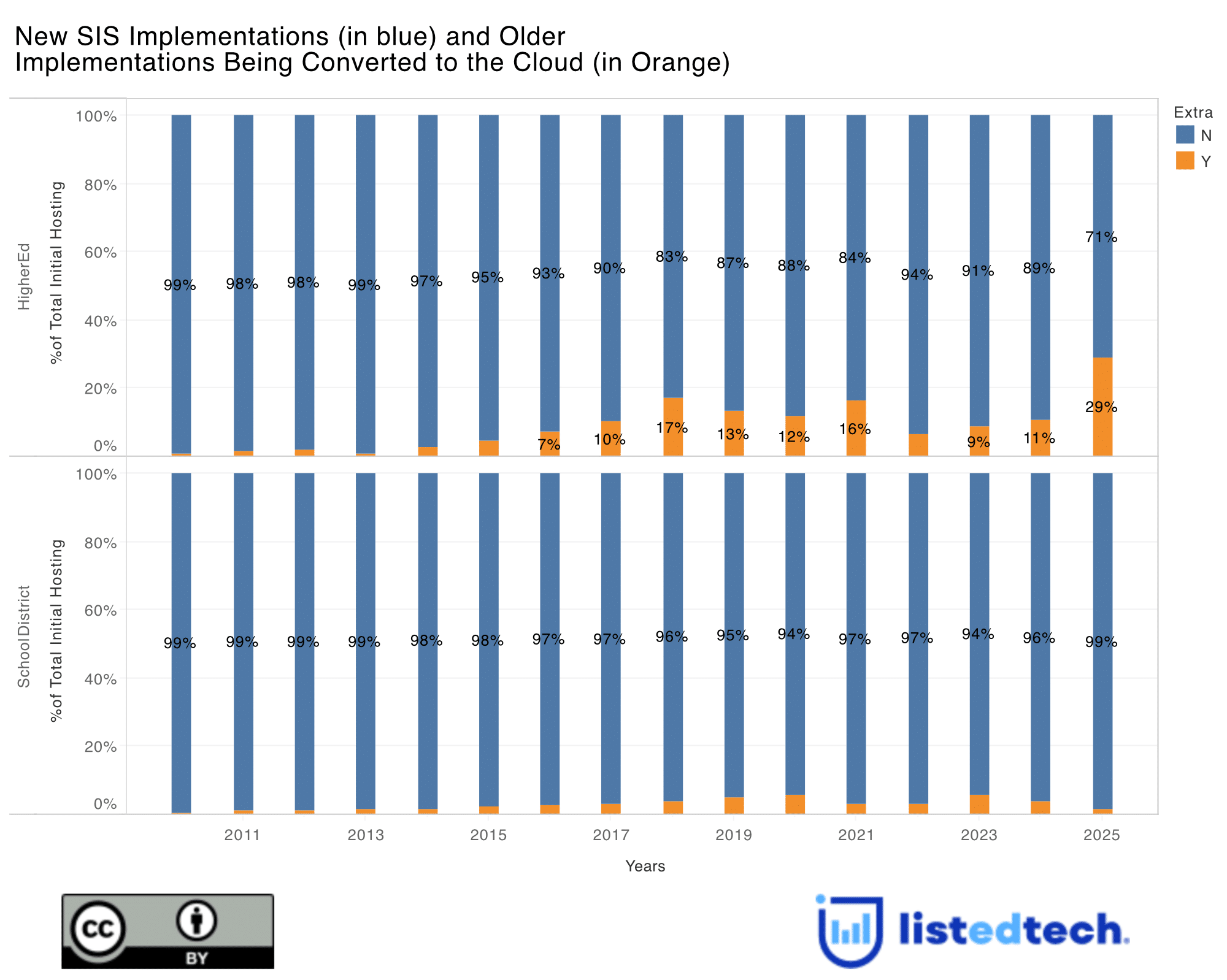
This matters because it signals a different phase of the market. Institutions are recognizing that long-term innovation is happening almost exclusively in the cloud, and they are moving their current foundations to keep up with vendor roadmaps.
Why the Industry Is Following Suit
This shift aligns perfectly with what we see from vendors. Education technology providers have pivoted their entire business models to support this reality:
- Product roadmaps are cloud-first
- New features are released in cloud environments
- Long-term innovation is happening almost exclusively there
We’re also seeing the emergence of entirely new SIS providers built from the ground up as cloud-native platforms, rather than retrofitting legacy, on-prem code.
The Takeaway
The cloud conversation in SIS has moved on.
New implementations are almost entirely cloud-based, vendors are fully aligned around cloud delivery, and now legacy systems are following at scale. Our data shows that nearly 45% of current SIS implementations are already in the cloud, and based on current migration patterns, 2026 is shaping up to be the year we cross the 50% mark.
The shift isn’t coming.
It’s already here.