
Key Takeaways
- Move Past “Bolt-On” Tools: True institutional transformation doesn’t come from standalone AI gadgets (like isolated chatbots or note-takers); it requires deep integration into your existing software stack.
- Orchestration Breaks Silos: Connecting AI across your LMS, SIS, and CRM unlocks proactive, cross-departmental solutions for student advising, enrollment, and cybersecurity.
- Ecosystem as the Operating Model: The institutions that thrive won’t just have the most AI features—they will be the ones that align data governance, security, and institutional strategy around a centralized AI ecosystem.
One of the more interesting themes emerging in AI discussions is the idea that the real transformation is not about adding AI to existing workflows. It is about redesigning how organizations operate from the ground up.
In a recent article, Julie Linn Teigland argues that organizations often treat AI as a “bolt-on” tool for incremental efficiency gains, when the real opportunity lies in rethinking processes, decision-making, and collaboration entirely.
Her key point: AI value does not come from a single platform or vendor. It comes from an ecosystem.
That idea has important implications for educational institutions.
Most colleges, universities, and school districts already operate inside highly interconnected ecosystems:
- LMS platforms
- Student Information Systems
- CRM tools
- Identity and access management
- Data warehouses
- Analytics layers
- Payment systems
- Communication platforms
- AI copilots and agents
The challenge is that many institutions are still approaching AI one product at a time:
- adding an AI chatbot
- enabling AI note-taking
- experimenting with AI grading
- piloting an AI assistant in a single department
However, the institutions likely to gain the most long-term value may be those that rethink workflows across the ecosystem itself.
For example:
- How does AI change advising when SIS, CRM, and LMS data are connected?
- How does AI reshape enrollment management when predictive analytics, communications, and financial aid systems work together?
- How does AI improve cybersecurity resilience when identity systems, cloud platforms, and user behavior analytics are orchestrated together?
- How do institutions govern AI consistently across dozens or hundreds of vendors?
This is where ecosystem orchestration becomes critical.
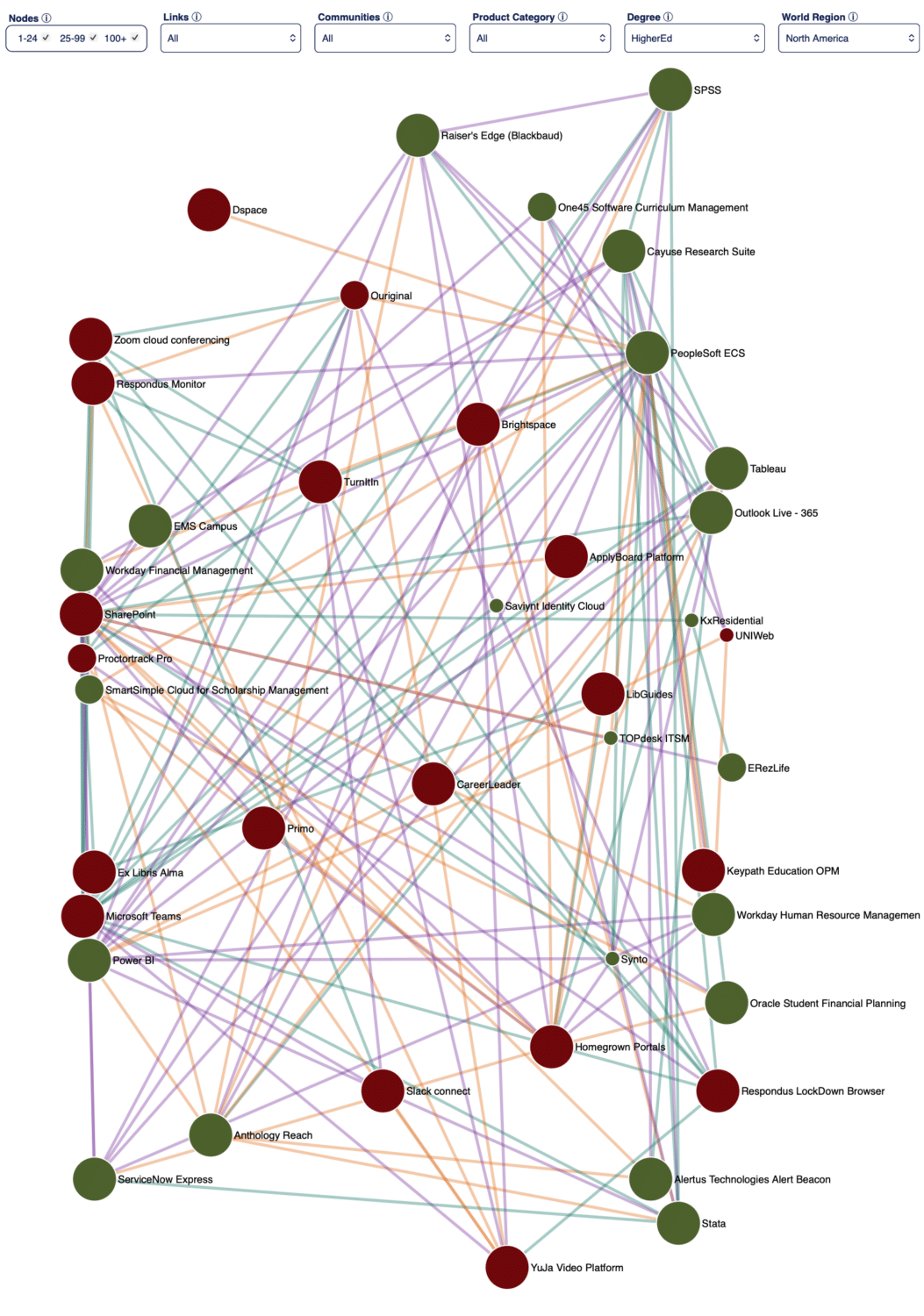
Educational institutions are increasingly dependent on interconnected cloud vendors and shared infrastructure. A weakness, outage, or security incident in one platform can ripple across the institution’s broader technology environment. At the same time, institutions are under pressure to modernize while managing budget constraints, staffing shortages, compliance requirements, and growing expectations around student experience.
The institutions that succeed may not be the ones with the “most AI,” but the ones that best align:
- data
- governance
- workflows
- partnerships
- security
- and institutional strategy
around shared outcomes.
One of the biggest lessons from the past few years in EdTech is that technology decisions rarely exist in isolation anymore. The ecosystem itself has become part of the institution’s operating model.
That may ultimately be where the next phase of AI transformation in education happens.
Reference:
Julie Linn Teigland, “The ecosystem advantage: reimagining value creation in the AI era” (May 19, 2026)